Collection · Indigenous Artisans
Genuine Native craftsmanship, signed and traceable.
Navajo, Zuni, and Hopi silversmiths working with real Kingman turquoise. Every piece signed or hallmarked. Nothing mass-produced, nothing misrepresented.
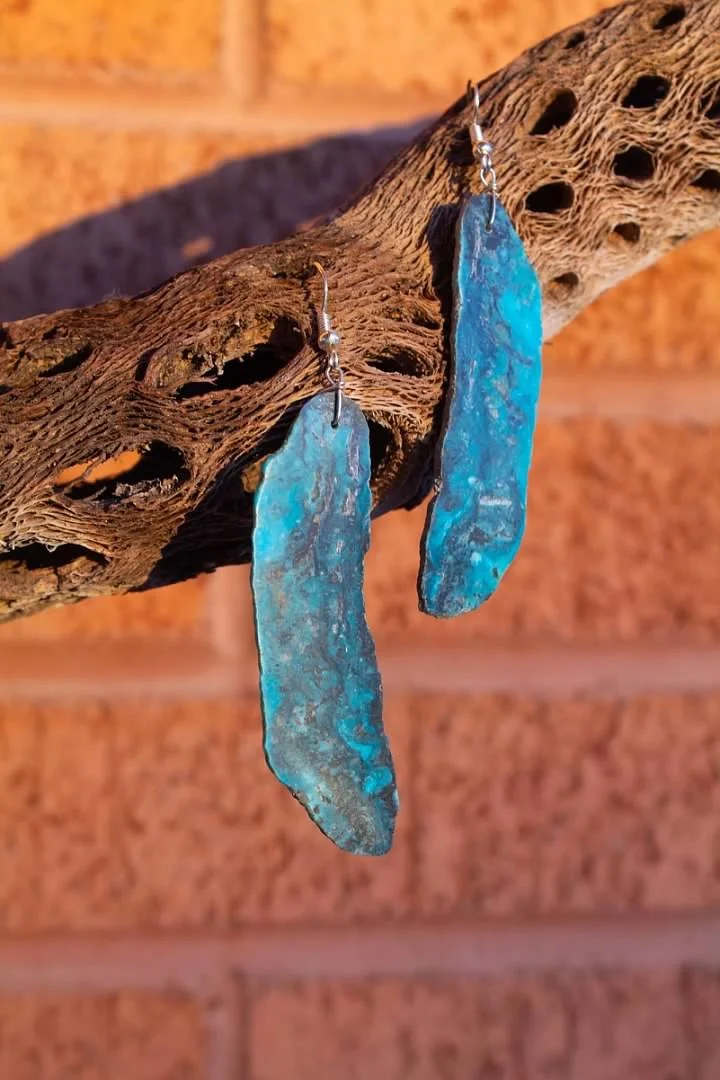
What "Indigenous artisan" actually means here
A lot of "Native-style" jewelry sold in the Southwest isn't Native-made. The Indian Arts and Crafts Act of 1990 makes it illegal to market non-Native jewelry as Native, but enforcement is patchy and the line gets blurred all the time, especially in tourist shops.
What we sell in this collection is the real thing. Each piece is built by a Navajo, Zuni, or Hopi silversmith. Each piece is signed or hallmarked on the back. We can tell you who made it, often with a brief story about the maker. If we can't, we don't put it in this case.
The traditions we carry
- Navajo — known for heavy-gauge silver, large single-stone settings, hand-stamped patterns, and statement squash blossom necklaces. The bulk of our Indigenous artisan inventory.
- Zuni — known for fine inlay and needlepoint work. Tiny calibrated stones set flush in patterns, often featuring bears, butterflies, and eagles.
- Hopi — known for overlay silversmithing. Two layers of silver where the top layer is cut away to reveal the oxidized layer underneath. Less stone-heavy than Navajo or Zuni.
How to spot real vs fake Native jewelry
Five quick checks before you buy from anyone:
- Look for a signature or hallmark on the back. Every legitimate Native silversmith signs their work.
- Ask who made it. A real shop will know. A fake shop will say "tribal" or "Southwestern" without a name.
- Check the silver weight. Native pieces are heavy-gauge sterling. Lightweight pressed pieces are usually mass-produced.
- Verify the stone. Real turquoise feels cool to the touch and has natural color variation. Read more in our real vs fake turquoise guide.
- Get it in writing. Anyone selling authenticated Native work should give you a written certificate or receipt naming the artisan.
What we have in the case right now
Squash blossoms, single-stone cuffs, ring sets, and a rotating selection of pendants and earrings. Inventory turns over fast — we don't keep a running list online because what's here today may be gone next week. Stop in or call to ask what's currently available from a specific artisan or tradition.
Pricing
Indigenous artisan work is priced higher than our in-house bench pieces because the labor is higher. A signed Navajo cuff with a single Kingman stone typically runs $400–$1,200. A full squash blossom necklace runs $850 and up, often into four figures for older or particularly fine pieces.
Other collections
Browse our rings, necklaces and pendants, bracelets and cuffs, earrings, or custom design.
Visit us
407 E Beale St, Kingman, AZ. Customers come in from Las Vegas, Flagstaff, Prescott, Laughlin, and Bullhead City regularly.
Pick a stone. Wear it for thirty years.
Stop by the shop, give us a call, or get directions and plan a Route 66 detour. We're here Monday through Saturday.